Classic AI vs Generative AI: Understanding the Difference
Introduction
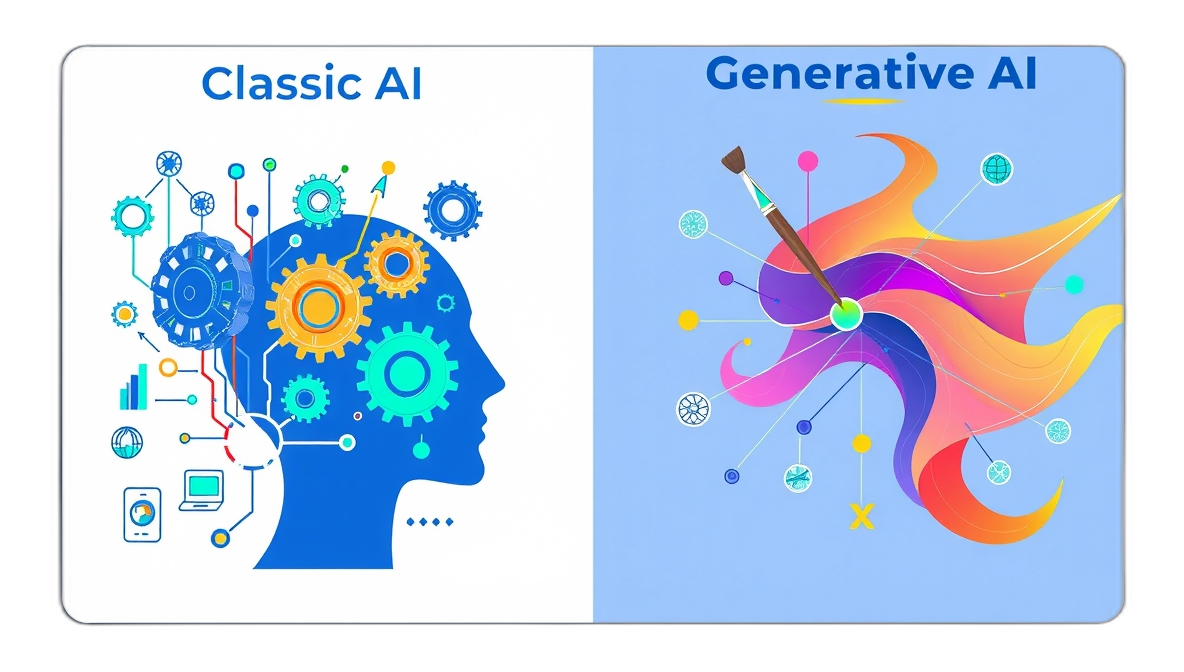
At Saigon AI, we help businesses navigate the complex landscape of artificial intelligence technologies. Understanding the fundamental differences between Classic AI and Generative AI is crucial for making informed decisions about which approach best serves your business objectives. While both have their place in modern technology, they serve distinctly different purposes and come with unique advantages and challenges.
Classic AI: The Foundation of Reliable Business Solutions
Classic AI, also known as Traditional AI or Narrow AI, refers to AI systems designed to perform specific, well-defined tasks using established algorithms and rule-based approaches. These systems include machine learning models for classification, regression, optimization, and prediction tasks that have been the backbone of AI applications for decades.
Key Characteristics of Classic AI:
- Repeatable and Consistent: Produces the same output given identical inputs
- Explainable: Decision-making processes can be understood and audited
- Scientifically Grounded: Based on mathematical models with proven methodologies
- Stable and Reliable: Performance is predictable and consistent over time
- Quality Control Friendly: Easy to test, validate, and monitor
- Deterministic: Behavior follows logical, traceable patterns
Common Classic AI Applications:
- Fraud detection and risk assessment
- Demand forecasting and inventory optimization
- Customer segmentation and recommendation systems
- Process automation and workflow optimization
- Quality control in manufacturing
- Medical diagnosis support systems
- Financial modeling and algorithmic trading
- Supply chain optimization
Generative AI: The Creative Powerhouse

Generative AI refers to AI systems that create new content, including text, images, audio, and video. These systems, powered by large language models and neural networks, can generate human-like responses and creative content but operate in fundamentally different ways than Classic AI systems.
Key Characteristics of Generative AI:
- Creative and Flexible: Can produce novel, varied outputs
- Non-Deterministic: Same input can yield different outputs
- Rapidly Evolving: Technology changes frequently with new models and capabilities
- Black Box Operation: Decision-making processes are largely unexplainable
- Probabilistic: Operates on statistical patterns rather than rules
- Quality Control Challenges: Difficult to predict or guarantee output quality
Common Generative AI Applications:
- Marketing content creation (primary strength)
- Creative writing and editorial
- Image and graphic design generation
- Social media content production
- Product descriptions and marketing materials
- Customer service chatbots
- Code generation assistance
- Brainstorming and ideation support
Key Differences: When to Choose Which
- Accuracy and reliability are critical
- You need consistent, repeatable results
- Regulatory compliance requires explainable decisions
- Working with sensitive data (financial, medical, legal)
- Quality control and testing are essential
- Long-term stability is important
- You need to audit decision-making processes
- Creating marketing and creative content
- Brainstorming and ideation are the goals
- Flexibility and creativity outweigh accuracy
- Content volume is more critical than precision
- Working in creative or experimental contexts
- Rapid prototyping of ideas or concepts
Our Recommendation
In our experience, most enterprise use cases require the reliability, explainability, and consistency that only Classic AI can provide. While Generative AI has captured significant attention, the fundamental business needs for predictable, auditable, and reliable AI solutions remain paramount.
While we advocate for Classic AI in most business applications, we recognize that Generative AI has transformative potential in specific use cases — particularly marketing content creation, where its creative capabilities truly shine and where non-determinism is actually a benefit. We stay current with the latest Generative AI technologies and integrate them when they genuinely serve our clients' needs, rather than implementing technology for novelty alone.
Not sure which approach is right for your project?
We'll give you an honest recommendation — not one driven by what's generating the most headlines.
Reach out to our team